

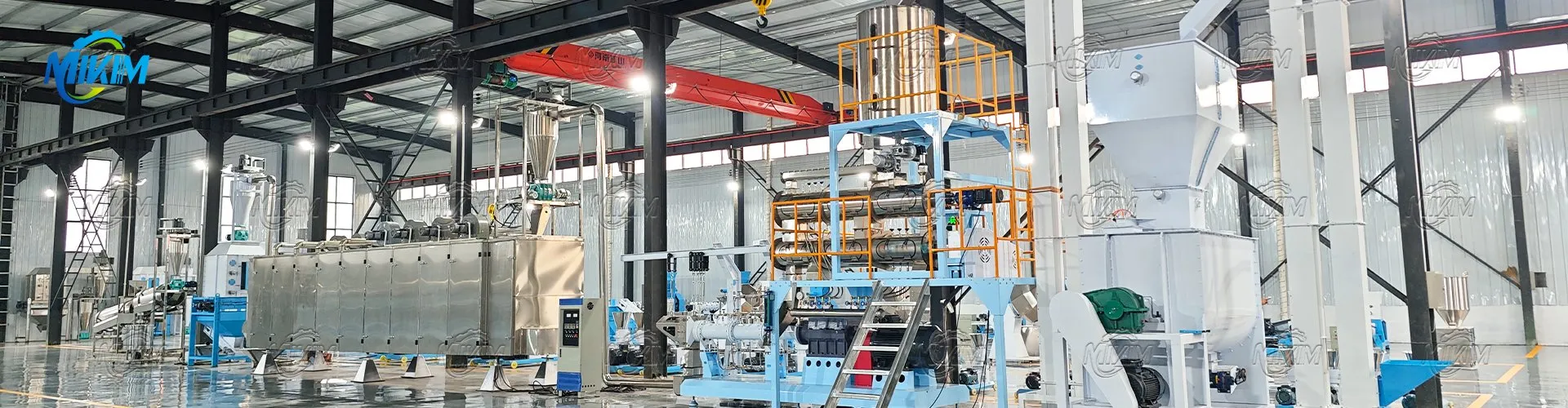
How Can A Floating Fish Meal Production Line Be Designed To Increase Feed Safety?
Leave a message
The fish floating food production line is designed to build a safety assurance system through four stages: "source purification, process sterilization, finished product control, and traceability." By combining physical and technological means, it minimizes feed safety risks and ensures animal safety.
The raw material inlet purification design blocks potential safety hazards at the source. The animal food extruder line incorporates a multi-stage purification system before raw materials enter the silo: first, a magnetic separator removes metal impurities to prevent metal particles from contaminating the feed and damaging the animal's digestive tract; second, a vibrating screen removes stones, weeds, and other foreign objects, improving feed purity; for animal-derived raw materials (such as fishmeal and meat and bone meal), a freshness detection device is added to determine whether the raw material has deteriorated by detecting the volatile basic nitrogen content, and deteriorated raw materials are automatically discharged. A production line in Zhejiang Province, using this design, has increased the impurity detection rate in raw materials to over 99%, completely preventing unqualified raw materials from entering the production process.
The sterilization design during the production process eliminates harmful microorganisms. The animal meal extruder line employs a dual sterilization mode of "high-temperature sterilization + ultraviolet-assisted sterilization." In the pelleting stage, a high temperature of 100-110℃ and a pressure of 3-5MPa are used to kill over 99.9% of harmful bacteria such as Salmonella and E. coli in the raw materials. Before packaging after cooling, an ultraviolet sterilization channel is set up to perform secondary sterilization on the pellet surface, further enhancing safety. Compared to the single sterilization mode of traditional stand-alone machines, the production line's dual sterilization is more thorough and avoids the risk of drug residues associated with chemical disinfectants. For pet food requiring low-temperature production, the production line uses microwave sterilization technology to kill microorganisms without raising the feed temperature, ensuring both safety and nutritional value.
The finished product quality inspection design ensures compliance with safety standards. The production line is equipped with an online detection system before finished product packaging, including moisture detection, microbial detection, and heavy metal detection. A moisture analyzer monitors the feed moisture content in real time, ensuring it is controlled below 12% to prevent mold growth due to excessive moisture. A rapid microbial detection device can detect indicators such as Salmonella within 15 minutes, automatically diverting substandard products. A heavy metal detection device uses X-ray fluorescence spectroscopy to detect lead, arsenic, and other heavy metals in the feed, ensuring compliance with national standards. Samples of each batch of feed are retained for 6 months for subsequent traceability.


about Us
We offer:
One-Year Whole Machine Warranty Service
On-site Installation, Commissioning, and Technical Guidance
24/7 Online Technical Support
Qualifications and Honors

Customer visit

FAQ
1. What is the price of the fish feed extruder pellet feed production line?
The price ranges from approximately $9,500-$40,000
2. Do you provide maintenance services for your customers?
Yes, we offer comprehensive after-sales maintenance services to our customers.


