Raw Material Density Is A Key Factor in Determining The Quality Of Aquatic Feed.
Leave a message
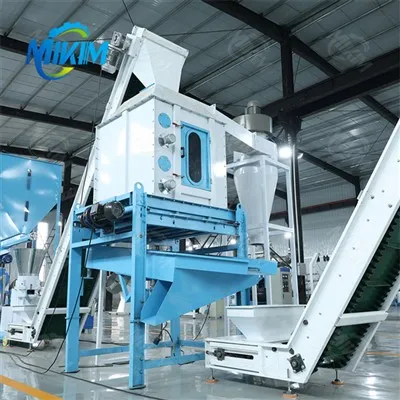
Aquaculture farmers all hope that the feed, once placed in the water, will be perfectly accessible to the fish and shrimp, without waste or water pollution. However, often the feed either floats on the surface and remains uneaten, or sinks too quickly and gets buried in the mud. This is actually due to an improper adjustment of the raw material density in the aquaculture feed pellet production line. Raw material density directly determines whether the feed floats or sinks, and also affects its stability in the water. Let's discuss its importance in detail below.
Three aspects
First, the density of raw materials determines the buoyancy of aquatic feed and its suitability for aquatic animals at different water depths. When producing floating fish feed (such as grass carp and silver carp feed) on aquatic feed pellet production lines, the raw material density is controlled at 0.4-0.5 g/cm³. This is achieved by increasing the proportion of bran and middlings (density around 0.4 g/cm³) and reducing the proportion of high-density raw materials (such as fishmeal and soybean meal), making the feed pellet density less than the density of water (1 g/cm³). This allows the feed to float on the surface, making it easier for surface-dwelling fish to feed. When producing sinking shrimp feed, the proportion of fishmeal (density 0.8 g/cm³) and shrimp meal (density 0.9 g/cm³) is increased, with the raw material density controlled at 1.1-1.2 g/cm³. This allows the feed to slowly sink to the bottom, conforming to the feeding habits of shrimp. If the raw material density is not properly controlled, both floating feed sinking to the bottom and sinking feed floating to the surface will result in fish and shrimp not being able to eat it, leading to a feed waste rate exceeding 30%.
Secondly, the density of raw materials affects the water resistance and water quality protection of aquatic feed. Aquatic feed needs to remain in water for 3-5 minutes without disintegrating. Both excessively high and low raw material densities affect the pellet structure: too low a density (below 0.4 g/cm³) results in loose pellets that easily penetrate water molecules, causing them to disintegrate quickly; too high a density (above 1.2 g/cm³) results in overly compact pellets, which, while providing good water resistance, are difficult for aquatic animals to digest, and undigested feed will sink to the bottom and pollute the water. Aquatic feed pellet production lines precisely control the raw material density within an optimal range. For example, in koi feed production, the density is controlled at 0.6-0.7 g/cm³, combined with starch and gelatinous materials, resulting in a compact and porous pellet structure that is both water-resistant and easily digestible. The feed can remain in water for 4 minutes without disintegrating, with minimal residue and less water pollution.
Furthermore, raw material density improves the nutrient utilization rate of aquatic feed. Aquatic animals have short intestines and limited digestive and absorptive capacity for feed. Feed with appropriate raw material density, particle size, and firmness allows aquatic animals to chew thoroughly, resulting in more complete nutrient absorption. For example, in tilapia feed production, controlling the raw material density at 0.5-0.6 g/cm³ produces uniformly sized and moderately firm particles. This increases the feed conversion ratio of tilapia from 1.8:1 to 1.5:1, meaning that 1.5 kg of feed can produce 1 kg of fish, significantly reducing farming costs.
Main equipment


about Us
Qualifications and Honors

Customer visit

FAQ
1. What is the price of the fish feed processing line?
The price ranges from approximately $15,000-$42,000
2. Do you provide maintenance services for your customers?
Yes, we offer comprehensive after-sales maintenance services to our customers.