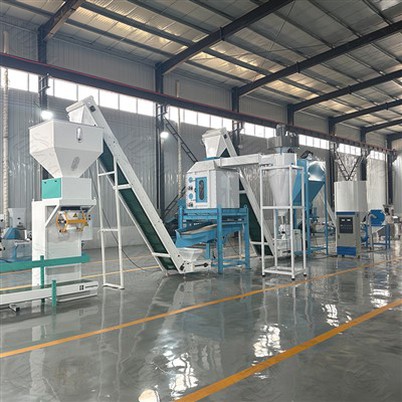
What Areas For Improvement Exist in The Production Process Of Ornamental Fish Floating Feed?
Leave a message
Improvement methods
Method 1: Add a "natural color enhancer premix" step. Previously, directly adding spirulina powder to the raw materials resulted in uneven mixing, with some particles being green and others white. Now, spirulina powder (or astaxanthin) is first mixed with a small amount of flour to create a "premix" (1 pound of spirulina powder mixed with 5 pounds of flour). This premix is then added to the total raw materials at a 5% ratio. After mixing for 5 minutes, each particle is a uniform green or red, resulting in more vibrant colors for koi.
Method 2: "Miniaturization and polishing" of the floating pet feed extruder mold to create delicate small particles. Ornamental fish have small mouths, so the original 1mm mold was changed to 0.8mm. The inner wall of the mold hole was polished, resulting in extruded particles resembling small green beads, round and smooth, preventing scratches to the fish's mouth. The extrusion pressure was increased to 6MPa, making the particles compact and able to float on the water without being dispersed by the current.
Method 3: Reduce drying time to retain active ingredients. The nutrients in spirulina powder are sensitive to high temperatures. The original 20-minute drying time was too long, so now it has been reduced to 10 minutes at 60℃ with the moisture content reduced to 13%. This ensures buoyancy while retaining the color-enhancing components, making the ornamental fish 20% brighter than the original feed.
Precautions
① Don't add too much color enhancer: Adding more than 8% spirulina powder will turn the pellets green, and the fish's feces will also turn green, polluting the aquarium water. 5% is just right, enhancing color without polluting the water.
② Replace the mold of the floating pet feed pellet machine regularly: The 0.8mm holes are easily clogged. Disassemble and clean it after three uses. Replace it immediately if you find wear on the mold holes, otherwise the pellets will deform and affect buoyancy.
③ Don't use chemical dyes: Industrial green and red dyes can poison ornamental fish. Only use water-soluble natural pigments (spirulina, astaxanthin), which are safe and effective. Check the ingredient list when purchasing.

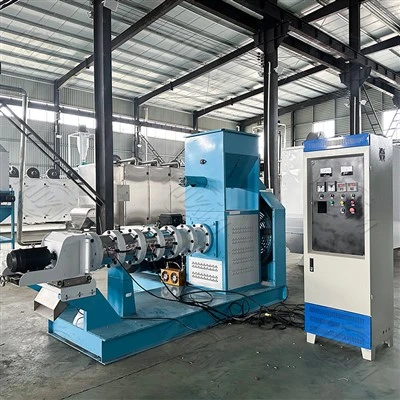


Product Parameters
|
Model |
Main motor (kw) |
Feeder (KW) |
Cutter(KW) |
Capacity (kg/h) |
Machine size (m) |
Weight(kg) |
|
DGP-40 |
5.5 |
0.4 |
0.4 |
40-50 |
1.36*1.3*0.8 |
320 |
|
DGP-60 |
15 |
0.4 |
0.4 |
120-150 |
1.36*1.33*0.86 |
420 |
|
DGP-70 |
18.5 |
0.4 |
0.4 |
200-250 |
1.36*1.33*0.86 |
550 |
|
DGP-80 |
22 |
1.5 |
0.55 |
300-350 |
2.3*1.7*1.4 |
720 |
|
DGP-90 |
30 |
1.5 |
0.55 |
400-450 |
2.3*1.7*1.4 |
1100 |
|
DGP-100 |
37 |
1.5 |
1.5 |
500 |
2*2.8*1.2 |
1500 |
|
DGP-120 |
55 |
1.5 |
1.5 |
600-700 |
2.2*2.9*1.2 |
1800 |
|
DGP-135 |
75 |
1.5 |
2.2 |
800-900 |
2.2*3.1*1.37 |
2000 |
|
DGP-160 |
90 |
2.2 |
2.2 |
1000-1200 |
2.3*3.15*1.38 |
2500 |
|
DGP-200 |
132 |
3 |
3 |
1800-2000 |
2.35*3.45*1.65 |
3200 |
about Us
Qualifications and Honors

Customer visit

FAQ
1. What is the price of the floating fish food extruder?
The price ranges from approximately $6,000-$20,000
2. Do you provide maintenance services for your customers?
Yes, we offer comprehensive after-sales maintenance services to our customers.