What Kind Of Fish Feed Production Line Is Suitable For Producing Feed For Salmon And Trout?
Leave a message
Differences in production methods
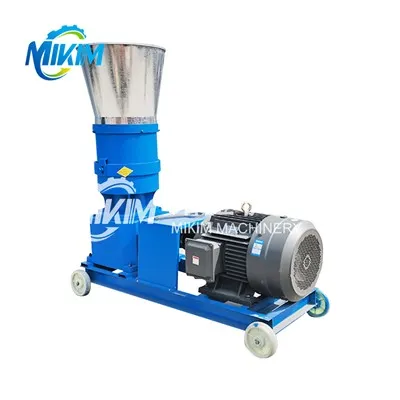
1. Pelleted feed: Made from fishmeal, soybean meal, and wheat middlings, the raw materials are crushed, mixed, and then conditioned with low-temperature steam (70-80℃). The pellets are extruded under low pressure, resulting in medium-density pellets with a moisture content controlled at 11%-13% to prevent clumping during low-temperature storage.


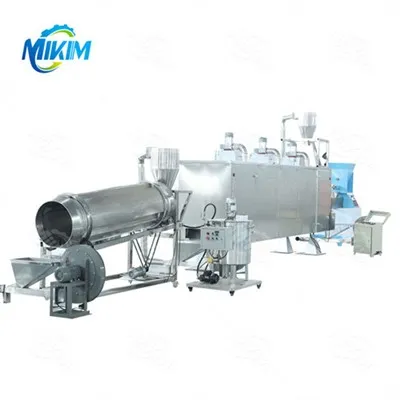
2. Extruded feed: Raw materials require the addition of appropriate amounts of digestive enzymes (such as protease and amylase). After crushing, the feed is conditioned with water and steam (moisture content 20%-22%) and then lightly extruded in an extruder at 105-115℃ to minimize the damage of digestive enzymes by high temperatures. The resulting pellets have small internal pores and a slightly lower density than pelleted feed, making them suitable for low-temperature aquatic environments.


Advantages and disadvantages of both
1. Pelleted Feed
Advantages: Low production cost, 15%-20% lower than extruded feed, suitable for large-scale freshwater fish farming; lower processing temperature, better retention of heat-sensitive nutrients such as B vitamins and amino acids; high pellet density, fast settling speed after being added to water, suitable for bottom-feeding fish.
Disadvantages: Poor stability in water, usually dissolving within 30 minutes, easily polluting water; low starch content (approximately 50%-60%), relatively low digestibility and absorption by fish, and higher organic matter content in feces.

2. Extruded Feed
Advantages: High starch content (80%-90%), good digestibility and absorption by fish, feed conversion ratio can be reduced by 0.1-0.2; strong stability in water, can remain in water for 1-2 hours without dissolving, reducing water pollution; the extrusion process can kill harmful bacteria such as E. coli and Salmonella in the raw materials, reducing the risk of fish diseases. Disadvantages: High production costs, and the high temperature during processing can lead to the loss of 10%-15% of heat-sensitive nutrients; low particle density, mostly suspended in the upper layer of the water, making it unsuitable for bottom-dwelling fish.

Particle selection
1. Advantages: Low processing temperature preserves digestive enzymes, vitamins, and other active ingredients more completely, suitable for the low metabolic level of cold-water fish; low production cost, 18%-22% lower than extruded feed, suitable for large-scale cold-water fish farming; moderate settling speed of pellets in low-temperature water, consistent with the mid-to-lower-level feeding habits of salmon and trout.
Disadvantages: Low starch maturity (40%-50%), weak digestive enzyme activity in cold-water fish, low feed digestibility and absorption rate, easily leading to slow growth; poor water stability, although the dissolution rate slows down in low-temperature water, nutrient loss still occurs within 1 hour.
2.
Advantages: High starch maturity (70%-80%), reducing the burden on the digestive system of cold-water fish, and lowering the feed conversion ratio by 0.15-0.25; strong water stability, remaining undissolved for 2.5-3 hours in low-temperature water, reducing nutrient waste; the extrusion process kills parasite eggs (such as anchor worm eggs) in the raw material, reducing the risk of parasitic diseases in cold-water fish.
Disadvantages: High temperatures during processing can cause 5%-10% of digestive enzymes to become inactive, requiring additional supplementation; the cost is relatively high, and the particle density is low. Some cold-water fish (such as schizothorax) are accustomed to bottom feeding and have difficulty obtaining suspended extruded feed.
FAQ
1. What is the price of the fish meal making production line?
The price ranges from approximately $2015,000-$55,000
2. Do you provide maintenance services for your customers?
Yes, we offer comprehensive after-sales maintenance services to our customers.