



Low-cost Feed Pellet Production Line | 0.5-5 t/h Budget Configurations

Low-cost Feed Pellet Production Line | 0.5-5 t/h Budget Configurations

Low-cost Feed Pellet Production Line | 0.5-5 t/h Budget Configurations

Low-cost Feed Pellet Production Line | 0.5-5 t/h Budget Configurations
Low-cost Feed Pellet Production Line | 0.5-5 t/h Budget Configurations
Low-cost Feed Pellet Production Line | 0.5-5 t/h Budget Configurations
The emergence of feed pellet production line can reduce the waste of raw materials.
Description
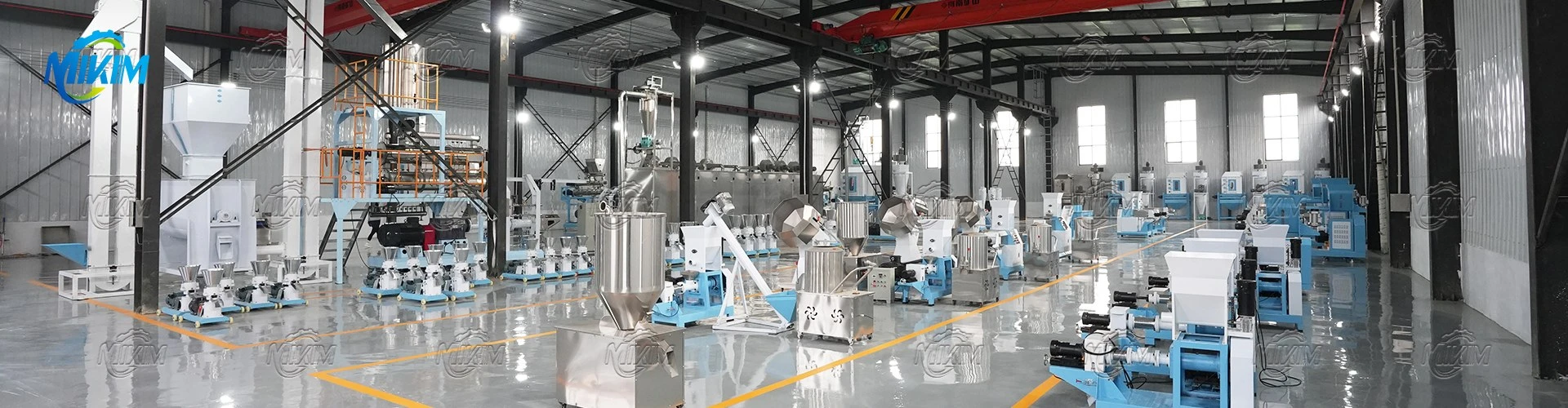
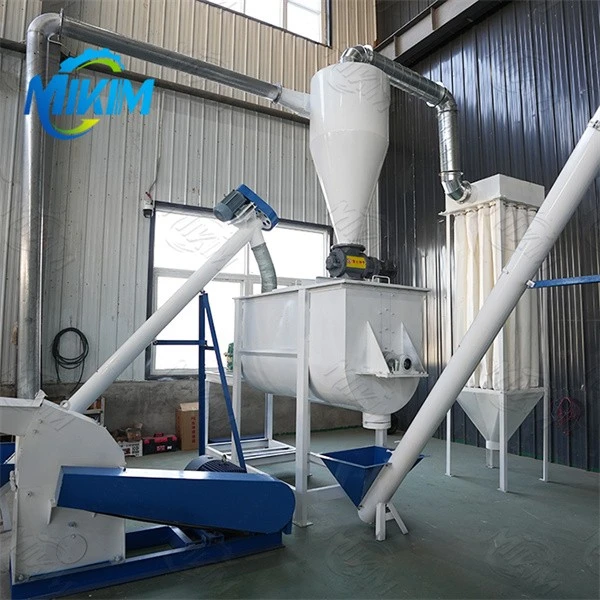
A low-cost feed pellet production line is a plant configured to reach the lowest viable cost per tonne, not the lowest purchase price. Mikim builds entry-level lines from 0.5 t/h to 5 t/h by simplifying the sections where automation adds little and keeping the specification intact where it affects pellet quality. Below are the cost structure, three standard budget configurations, a worked payback calculation, and the cost traps that catch first-time buyers.
What Low Cost Should Mean - and What It Should Not
The cheapest line on a quotation is rarely the cheapest line over five years. Three decisions dominate the total cost of ownership, and none of them appears in the headline equipment price:
- Die and roller quality. A die that lasts 800 h instead of 300 h is worth more than any discount on the machine it fits into.
- Drivetrain brand. A gearbox and motor from a brand with local spares costs more up front and saves you a shutdown when a bearing fails.
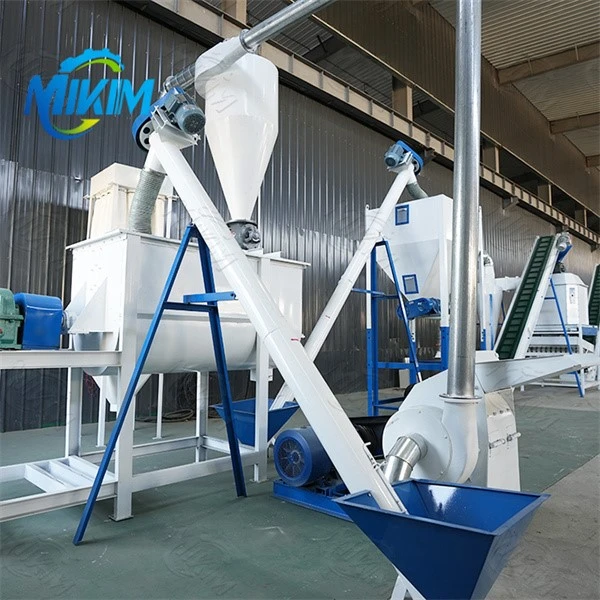
- Civil and installation. On a small project, installation, freight and electrical work can equal the equipment cost. A design that avoids a pit, a tower or a boiler saves more than any equipment downgrade.
What "low cost" should never mean: an undersized cooler, no dust extraction, or a single batching scale trying to weigh both major ingredients and a 0.5 kg premix addition. All three save money today and cost more than they saved within a year.
Where Your Money Actually Goes
| Cost element | Share of total project cost | Can you reduce it? | What happens if you do |
|---|---|---|---|
| Pellet mill (die, rollers, drivetrain) | 25–35% | Only by sizing correctly | An undersized mill caps your output - the one cost you cannot fix later |
| Grinding and mixing | 10–15% | Yes, with a simpler mixer | Mixing uniformity suffers; CV above 5% shows up as uneven animal performance |
| Batching and control | 10–20% | Yes, this is the main lever | Manual or semi-automatic batching is genuinely viable below 2 t/h |
| Cooler, screen, crumbler | 8–12% | Only by matching capacity | An undersized cooler is the most common hidden cost - mouldy pellets in storage |
| Conveying and structure | 8–12% | Yes, with a single-storey layout | A tower layout halves floor area but adds steelwork, pit and height |
| Packing | 5–15% | Yes, big lever | Manual bagging costs labour, not capital; a robot palletiser only pays above 5 t/h |
| Electrical and PLC | 5–10% | Partly | Losing the VFDs on the mill and feeder costs you load control and raises energy use |
| Installation and commissioning | 10–20% | Yes, with a modular design | Skipping our commissioning means you will not hit design output in the first month |
| Freight and duty | 8–20% | Yes, by packing density | Depends on your port - get this quoted separately, not inside the equipment price |
Not Sure Where Your Budget Should Go?
Tell us your target capacity and budget. We'll help you build a practical pellet line configuration and estimate the key costs before you buy.
Three Budget Configurations Compared
| Item | Starter | Standard | Growth |
|---|---|---|---|
| Capacity | 0.5–1 t/h | 1–2 t/h | 2–5 t/h |
| Grinding | Hammer mill, 7.5–11 kW | Hammer mill, 15–22 kW | Hammer mill, 30–37 kW |
| Mixing | Single-shaft ribbon mixer | Single-shaft paddle mixer | Double-shaft paddle mixer |
| Batching | Manual weighing by hand | Semi-automatic, PLC recipe, single scale | Semi-automatic, PLC recipe, dual scale |
| Pelleting | Flat die mill BH-260 or BH-300 | Flat die mill BH-360 or ring die SZLH250 | Ring die SZLH320 |
| Conditioning | None - dry pelleting | Water conditioning | Steam conditioner, boiler included |
| Cooling | Counter-flow cooler, matched | Counter-flow cooler, matched | Counter-flow cooler with temperature control |
| Packing | Manual bagging with a platform scale | Semi-automatic bagging scale | Automatic weighing, bagging and sewing |
| Installed power | 45–70 kW | 80–130 kW | 150–220 kW |
| Footprint | About 12 × 6 m | About 20 × 8 m | About 28 × 10 m |
| Operators per shift | 3–4 | 4–5 | 5–6 |
| Energy per tonne | 35–50 kWh | 32–42 kWh | 30–40 kWh |
| Best for | Own-farm use, 200–800 head, or a first commercial step | Regional mill selling bagged feed locally | Commercial mill with several SKUs and a truck fleet |

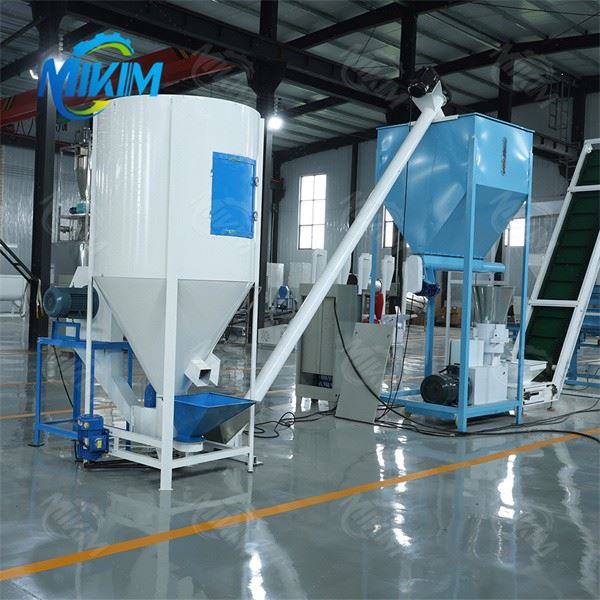
Investment levels differ mainly by configuration rather than by brand or country, so we quote per project rather than publishing a price list: tell us your capacity target, raw material list, pellet diameter and packing format and we will return itemised pricing for the two configurations that fit. If your priority is automation rather than entry cost, see our automated feed production line equipment.
Six Ways to Cut Capital Cost Without Hurting Pellet Quality
- Stay single-storey. A tower layout looks efficient on paper but adds platform steelwork, a pit, a higher building and more erection time. On lines below 5 t/h the single-storey layout is almost always cheaper.
- Start with manual or semi-automatic packing. A robot palletiser only pays back above about 5 t/h. Below that, a platform scale and two people are the lower-cost option, and you can add the packer later.
- Manual batching below 2 t/h. If you run three or four formulas, an operator with a hand scale is genuinely cheaper than a PLC batching system. Above 2 t/h, or above six formulas, that reverses.
- Do the civil work locally. We supply the drawings; your local contractor pours the slab. This is usually the single largest local-cost saving and it does not touch the equipment specification.
- Size the boiler to actual conditioning duty. Many quotes include an oversized boiler. If you are pelleting dry or with water only, you do not need steam at all - that removes the boiler, the feed water treatment and a licensed operator.
- Buy a full container load. Freight is charged by volume well before weight. A complete line that fills containers efficiently costs less to ship than the same line bought in stages.
Running Cost per Tonne
| Cost item | Typical range per tonne | Notes |
|---|---|---|
| Electricity | 3–8 USD | At 30–50 kWh/t and 0.10–0.16 USD/kWh; vary widely by country |
| Labour | 2–6 USD | Depends on local wages and how much packing is manual |
| Wear parts (die, rollers, hammers) | 1–4 USD | Rises sharply with abrasive or high-fibre raw material |
| Routine maintenance and lubrication | 0.5–1.5 USD | Excludes unscheduled repairs |
| Packaging | 3–8 USD | Bags are a major cost; bulk delivery removes most of it |
| Steam or water conditioning | 0.5–3 USD | Zero if you pellet dry |
| Total conversion cost | 10–30 USD/t | Excludes raw material |
Raw material is 70–80% of the cost of finished feed, so the fastest route to a lower cost per tonne is usually formulation and procurement, not machinery. The machine's job is to keep conversion cost low and waste near zero.
Payback Calculation - Worked Example
A Standard configuration (1–2 t/h) bought by a farm cooperative that previously bought bagged compound feed:
| Item | Value |
|---|---|
| Output | 1.5 t/h × 6 h × 300 days = 2,700 t/year |
| Bought-in feed price | 420 USD/t |
| Cost of self-produced feed | Raw material 340 USD/t + conversion 18 USD/t = 358 USD/t |
| Saving per tonne | 62 USD/t |
| Annual saving before fixed costs | 2,700 t × 62 USD = 167,400 USD |
| Less: labour, maintenance, finance | About 48,000 USD/year |
| Net annual benefit | About 119,000 USD/year |
| Indicative payback on a Standard line | Typically 8–18 months depending on configuration and local costs |
The figures above are an illustrative model, not a quotation. Insert your own local feed price, raw material cost, electricity tariff and wage level - the structure of the calculation is what matters, and the two variables that move payback most are the bought-in feed price and the number of operating days per year.
Hidden Costs Buyers Usually Miss
- Freight and duty quoted separately. Always get these itemised. A low equipment price with the freight buried in it is not a low price.
- Electrical work to local code. The cable, tray, panel and licensed electrician are almost never in the equipment quote.
- Building and foundations. Even a single-storey line needs a flat reinforced slab.
- Spare parts stock. Budget for a first-year spares kit: one set of hammers, a roller shell set and the seals.
- Working capital. You will now be buying raw material in bulk instead of buying feed by the bag.
- Operator training time. A week of lost output while the team learns the plant is normal.
- Boiler certification. In many markets a steam boiler needs registration and a licensed operator - one more reason to check whether you need steam at all.
Semi-Automatic Against Fully Automatic: The Cost Difference
| Factor | Semi-automatic | Fully automatic |
|---|---|---|
| Capital cost | Lower - typically 60–75% of a fully automatic line of the same capacity | Higher |
| Operators per shift (1–2 t/h) | 4–5 | 2–3 |
| Batching accuracy | PLC recipe, single scale: ±0.2% | Dual scale with micro-dosing: ±0.05% |
| Recipe changeover | Recipe selection, some manual steps | Fully automatic, including micro bins |
| Best below | 2 t/h | - |
| Best above | - | 3 t/h, where the labour saving pays back the extra capital |
Below about 2 t/h, semi-automatic is the lower-cost choice almost every time - the labour you save does not pay for the control system. Above 3 t/h it reverses. Between 2 and 3 t/h the answer depends on your local wage level, which is a useful thing to tell us when you ask for a quote.
Who This Line Suits
A low-cost configuration is the right answer if you are feeding your own livestock or poultry, making bagged feed for a local market, or testing a market before committing to full automation. It is the wrong answer if you need several SKUs a day, have to meet a written traceability standard, or are planning to pass an integration's feed mill audit - in those cases the automated line is the better base. If you only need the pelleting step, a standalone livestock feed pellet machine may be all you need.
Certifications and Customer Installations

3-4t/h Animal Feed Ring Die Pellet Production Line On-site Installation
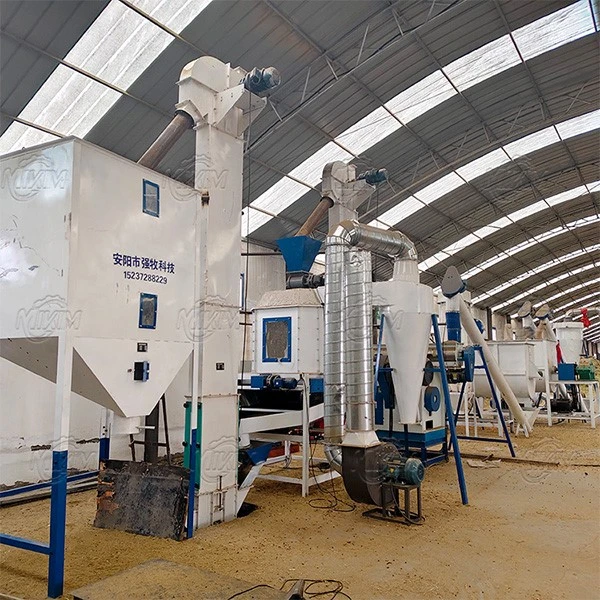
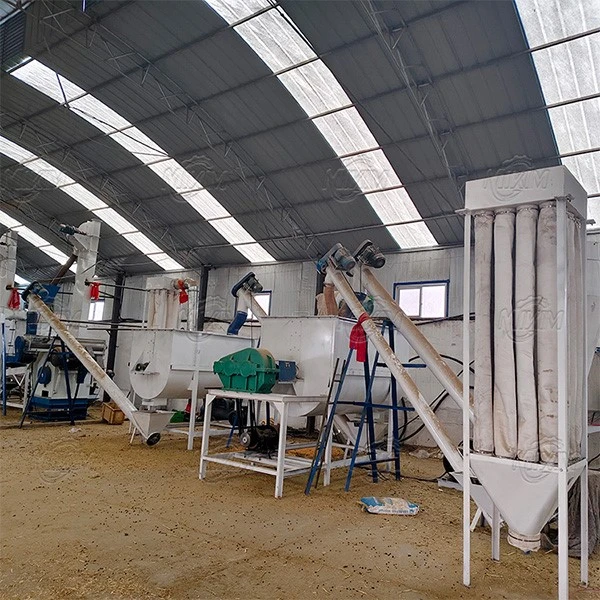
Customer visits

FAQ
How much does a low-cost feed pellet production line cost?
It depends on capacity and configuration rather than on a published price: a Starter line (0.5–1 t/h) with manual batching and manual packing sits at the bottom of the range, a Standard line (1–2 t/h) with PLC semi-automatic batching in the middle, and a Growth line (2–5 t/h) with steam conditioning above that. Freight and duty are a further 8–20% and vary by port. Send your capacity target, raw material list, pellet diameter and packing format and we will quote the two configurations that fit.
What is the cheapest capacity to start with?
1–2 t/h is the sweet spot for most first-time buyers. Below 0.5 t/h the cost per tonne of capacity is poor and you will want to upgrade within a year. Above 2 t/h you are paying for capability you cannot fill until your market is established. If you are feeding only your own animals, work out your daily tonnage first - many farms find a standalone pellet mill is enough.
Can I start manual and automate later?
Yes, and we recommend it. Design the line with the space, the structural supports and the electrical capacity for the automation you expect to add - a PLC batching system and an automatic packer can be retrofitted, but a building that is too short or a power supply that is too small cannot. Tell us your three-year plan when you order.
Does a lower price mean lower pellet quality?
Not necessarily. The specification elements that drive pellet quality are die and roller quality, grind size, conditioning and cooling. The elements you can safely simplify on a budget line are batching automation and packing - neither of these affects the pellet. What you should never downgrade is the cooler and the die.
What is the running cost per tonne of feed?
Conversion cost, excluding raw material, is typically 10–30 USD per tonne: electricity 3–8 USD, labour 2–6 USD, wear parts 1–4 USD, maintenance 0.5–1.5 USD, packaging 3–8 USD, and conditioning 0–3 USD. Raw material is 70–80% of total cost, so formulation and procurement move the number far more than the machinery does.
How quickly does a feed pellet line pay for itself?
For a farm cooperative replacing bought-in compound feed, the model is straightforward: save the difference between the bought-in price and your own raw material plus conversion cost, across your annual tonnage. In the worked example on this page (2,700 t/year, 62 USD/t saving) the net benefit is about 119,000 USD/year, which typically pays back a Standard line in 8–18 months. Insert your own local prices - the bought-in feed price and the operating days per year move the answer most.
Do I need a steam boiler?
Only if you want steam conditioning. Dry pelleting works and is common on budget lines; water conditioning is a middle step. Steam improves pellet durability and throughput and reduces die wear, but it adds the boiler, feed water treatment, fuel and in many markets a registration and a licensed operator. Below 2 t/h it is usually not worth it.
What hidden costs should I budget for?
Freight and duty (8–20%, always get them itemised), electrical work to local code, building and foundations, a first-year spares kit, working capital for bulk raw material, and roughly a week of lost output while operators are trained. If you add steam, budget for boiler certification too.
Hot Tags: Low-cost Feed Pellet Production Line | 0.5-5 t/h Budget Configurations, China Low-cost Feed Pellet Production Line | 0.5-5 t/h Budget Configurations manufacturers, suppliers, factory, wheat straw feed pellet machine, feed pellet machine for reptile food, animal feed production line, supplement feed pellet machine, mobile feed pellet machine, adjustable feed pellet machine
Send Inquiry
You Might Also Like
