How Does a twin screw pet pellet making machine Work?
Leave a message
content
Temperature is a core parameter affecting the performance of a dog food pellet machine, directly determining the degree of raw material maturation and nutrient retention. During operation, the extrusion chamber temperature is typically controlled between 120-160℃, with different temperatures required for different products: For basic dog food production, 120-140℃ ensures sufficient starch gelatinization while retaining over 70% of heat-sensitive vitamins; for high-end grain-free food, due to its low grain content, the temperature needs to be increased to 140-160℃ to ensure sufficient protein denaturation and improve digestibility; for kitten food, the temperature needs to be lowered to 120-130℃ to minimize the loss of heat-sensitive nutrients (such as B vitamins). Temperature adjustment must be achieved through a temperature control system, and the rate of temperature increase must be carefully monitored to avoid sudden rises and falls that could lead to localized scorching or uneven maturation of the raw materials.
The screw speed directly affects the residence time and extrusion pressure of the raw materials within the extrusion chamber of the pet food extrusion equipment machine. Higher rotation speed results in shorter raw material residence time (typically 10-20 seconds) and higher extrusion pressure; lower rotation speed results in longer residence time and lower pressure. During production, the rotation speed needs to be adjusted according to the characteristics of the raw materials and product requirements: fine-grained raw materials with low moisture content require a lower rotation speed (300-400 r/min) to extend the residence time and ensure thorough maturation; coarse-grained raw materials with high moisture content require a higher rotation speed (400-600 r/min) to increase extrusion pressure and prevent material agglomeration and blockage.
The extrusion pressure of a cat food extrusion machine is closely related to the feed rate and is a key parameter for ensuring the molding effect. The pressure is typically controlled between 3-8 MPa. Too high a pressure results in overly hard granules with poor palatability; too low a pressure results in loose, brittle granules that easily disperse in water. An excessively fast feed rate will cause a sudden increase in extrusion chamber pressure; an excessively slow feed rate will result in insufficient pressure. Therefore, stable pressure must be maintained through coordinated adjustment of the feeding system and screw rotation speed. For example, when the pressure exceeds 8 MPa, the feed rate needs to be reduced or the screw speed increased to release the pressure; when the pressure is below 3 MPa, the feed rate needs to be increased or the screw speed decreased to increase the pressure.
By precisely adjusting parameters such as temperature, speed, and pressure, precise control over pet food quality can be achieved. During production, the pellet condition needs to be monitored in real time: if the pellet surface is smooth and the texture is brittle, the parameters are appropriate; if the pellet is black and has a burnt smell, the temperature needs to be reduced; if the pellet is loose, the pressure or temperature needs to be increased; if the pellet is too hard, the pressure or speed needs to be reduced. Only by mastering the parameter adjustment logic can the small pet food extrusion machine stably produce high-quality pet food.
Related equipment

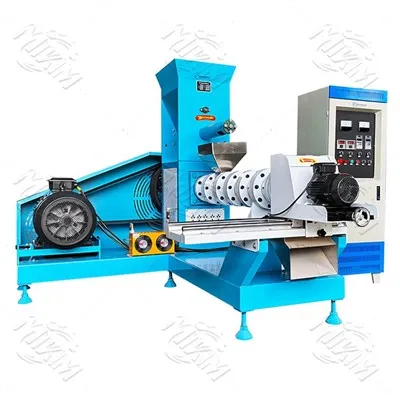
about Us
MIKIM's fish feed pellet production lines and supporting machinery offer excellent value for money. Not only are they affordable, eliminating middlemen markups and allowing small and medium-sized enterprises (SMEs) and fish farmers to purchase complete sets of equipment at reasonable costs, but they also boast exceptional efficiency. The fully automated process, from raw material crushing and precise ingredient mixing to extrusion pelleting and maturation, is completed in one continuous flow. This results in high starch gelatinization rates and uniform pellet formation, significantly improving production efficiency and feed quality, truly achieving "low cost, high output." Choosing a MIKIM fish feed pellet production line means enjoying comprehensive pre-sales and after-sales service, including 24-hour online customer support, a one-year warranty on the entire machine, professional on-site installation, commissioning, and maintenance, and a stable supply of spare parts. Customers can buy with confidence and use with peace of mind, with both excellent value and service quality!!!
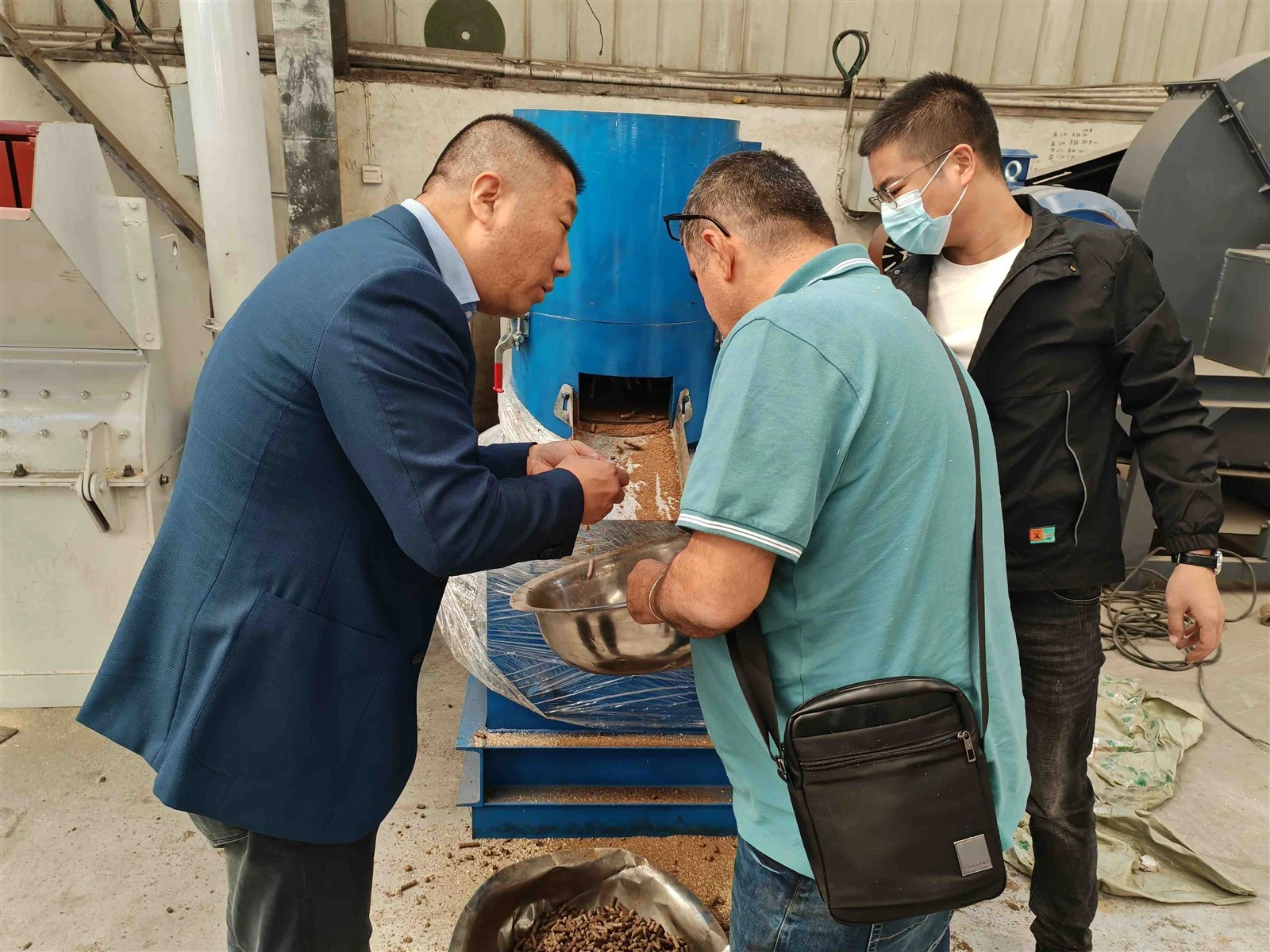
Customer visit
Certificate of Honor

FAQ
1. What is the price of the Single-Screw pet food extrusion machine?
The price ranges from approximately $1,500-$55,000
2. Do you provide maintenance services for your customers?
Yes, we offer comprehensive after-sales maintenance services to our customers.
If you would like to learn more about MIKIM machinery, please contact us. We offer one-stop service and welcome your inquiries!!!